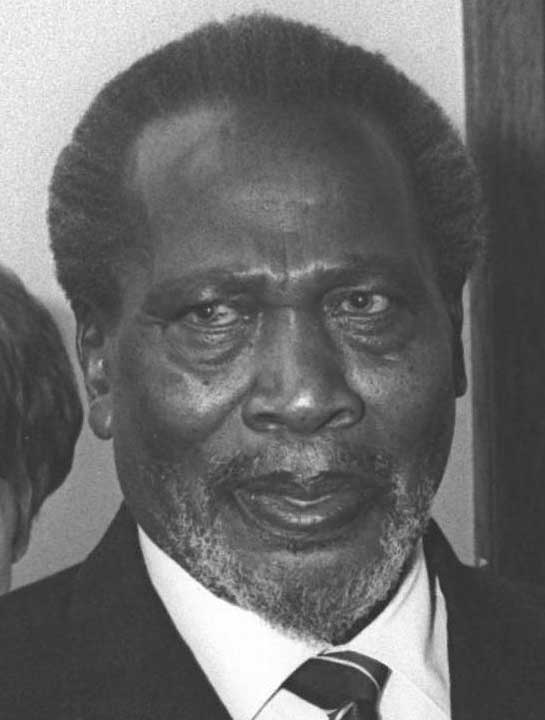
Jomo Kenyatta was the founding father and first president of independent Kenya, the nationalist leader who guided his country from British colonial rule to nationhood and became an elder statesman of post-colonial Africa. Born into the Kikuyu people, he received a mission-school education before becoming active in the cause of African rights in the 1920s.
He spent many years in Britain, where he studied, wrote a notable anthropological account of his people, Facing Mount Kenya, and immersed himself in pan-African politics alongside other future African leaders. Returning home after the Second World War, he became the foremost spokesman for Kenyan independence and leader of the principal nationalist movement.
As the violent anti-colonial Mau Mau uprising gripped Kenya in the 1950s, the British accused Kenyatta of leading it and imprisoned him for years, despite his denials. His detention only enhanced his stature, and on his release he emerged as the unchallenged leader of the independence struggle. When Kenya became independent in 1963, he became its first prime minister and then president.
In power, Kenyatta proved a pragmatic and conservative ruler. He preached reconciliation under the slogan "Harambee" — "let us all pull together" — reassured the country's white settlers and foreign investors, and presided over relative stability and economic growth, while consolidating his own authority. Revered as "Mzee," the wise elder, he led Kenya until his death in 1978.