When Howe assumed command of the British Navy in North America in 1776, he wished to negotiate a settlement with the colonists. This inclination may have influenced his brother, William Howe, who commanded the British Army. Richard Howe delayed the imposition of a naval blockade, made repeated attempts to approach Congress, and advocated positive relations between his ship captains and the colonists. Rather than bringing about a negotiated peace, these measures merely helped the revolution grow in strength. In 1777, Howe turned to forceful methods, although the British Government reprimanded him for his leniency. He was about to resign when France entered the war, and Howe was needed to command the British Navy in its effort to avoid the French fleet. After this, Howe left military service, but returned to duty as Commander-in-Chief of the Channel fleet, in which post he saved Gibraltar for Britain.
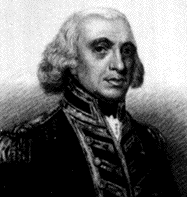
portrait — Richard Howe
Richard Howe
1726–1799 · Commander-in-Chief of the British Navy in North America, Peace Commissioner
When Howe assumed command of the British Navy in North America in 1776, he wished to negotiate a settlement with the colonists. This inclination may have influenced his brother, William Howe, who commanded the British Army.