As Washington filled with Union soldiers, the pressure grew to take action. Horace Greeley, the mercurial editor of the New York Tribune, kept up a constant stream of editorials echoed throughout the Union: "Forward to Richmond — Forward to Richmond!" was the cry.
Army Chief of Staff Winfield Scott put forth a plan to beat the Confederacy. He called for a complete blockade of the South, followed by a powerful army to seize the Mississippi and New Orleans. Only after all this was accomplished did he recommend launching a decisive attack against the center of the Confederacy; he opposed any piecemeal actions. The demands for action, however, could not be denied. General McDowell came up with a plan for a direct attack on Confederate troops massed at Manassas Junction on the road to Richmond. One of the keys to the plan called for keeping the 10,000 troops of Confederate General Johnston busy in the Shenandoah Valley, so that he could not reinforce Beauregard at Manassas.
General Patterson, whose responsibility it was to keep Johnston's troops occupied in the Shenandoah Valley, failed in this objective, and Johnston began transporting his troops south by train — the first use of rail in war.
The March to Battle
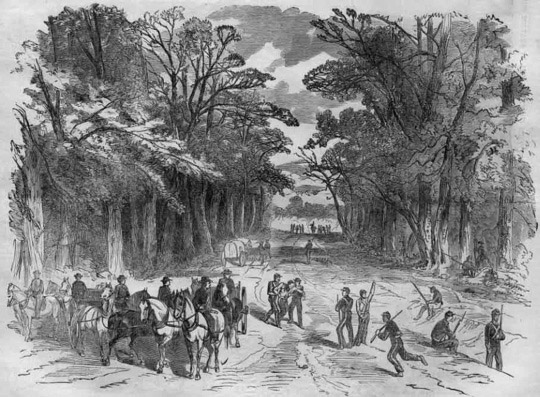
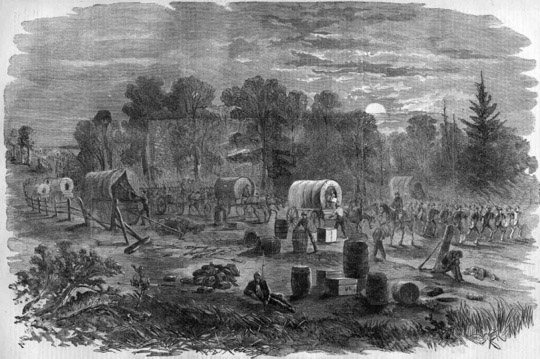
On July 16th, General McDowell got his army of 34,000 men in motion from Washington toward the Confederate army, a distance of some thirty miles. The Union officers had no experience handling such large armies, and the Union soldiers had no experience at being soldiers — so the march took far longer than it should have. By the first evening, advance elements reached Fairfax Courthouse; the few Confederate pickets there quickly retreated. On the 18th, the first elements reached the hamlet of Centreville. A brigade sent out to reconnoiter the Confederate lines found them — and lost 80 men.
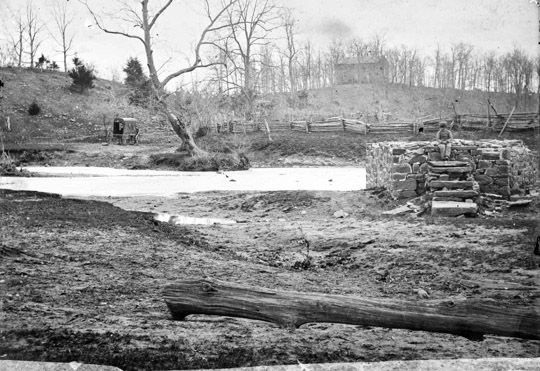
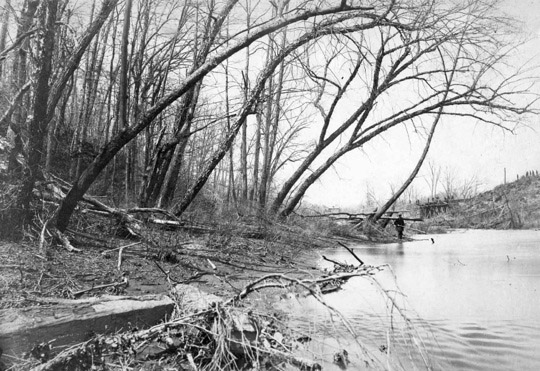
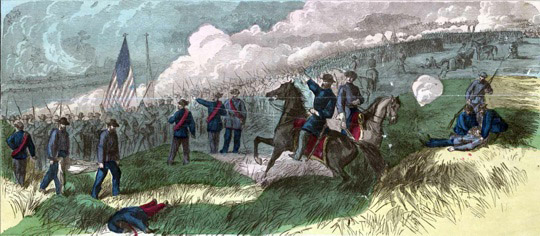
McDowell had 34,000 troops ready to attack 25,000 Confederates spread over eight miles on the other side of Bull Run. His plan called for a flanking attack on the Confederate left, with diversionary attacks at the stone bridge in the center and on the right. At 2 in the morning, McDowell's army began to move — but the march around the flank was long and slow, and it was not until 11 AM that his 12,000 men crossed Bull Run at Sudley Springs.
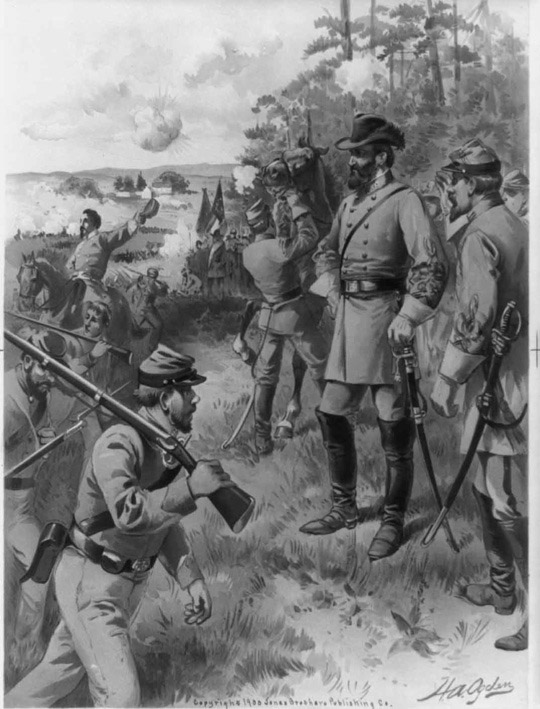
"There Is Jackson, Standing Like a Stone Wall"
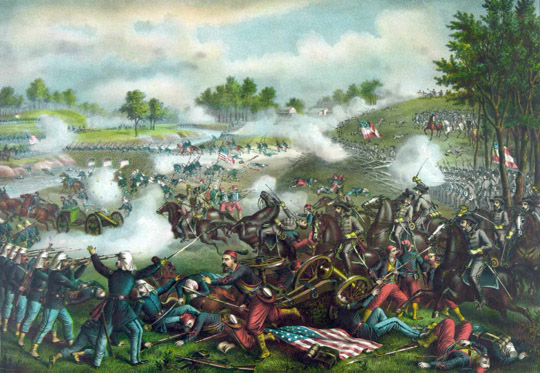
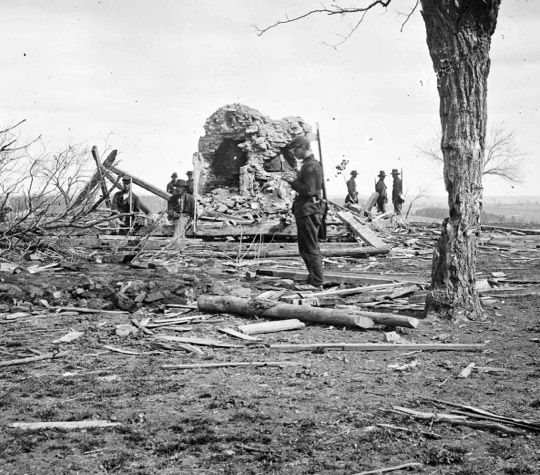
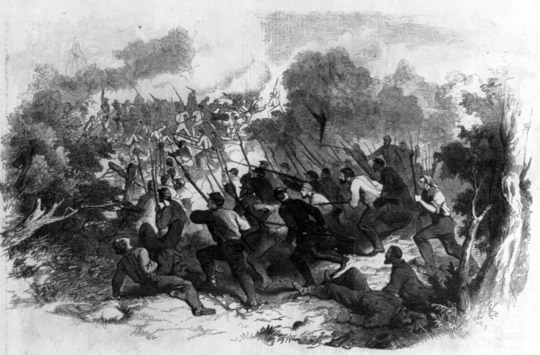
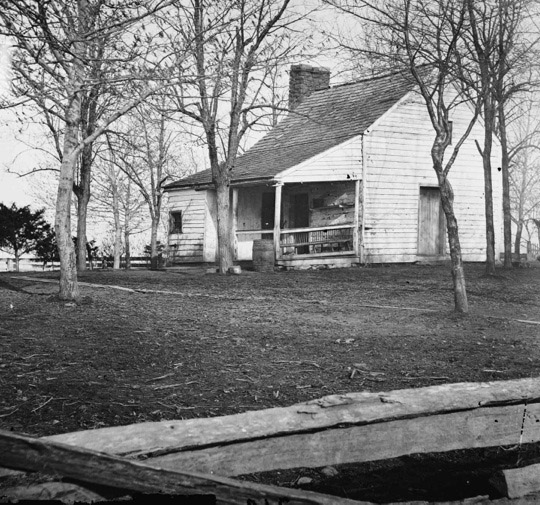
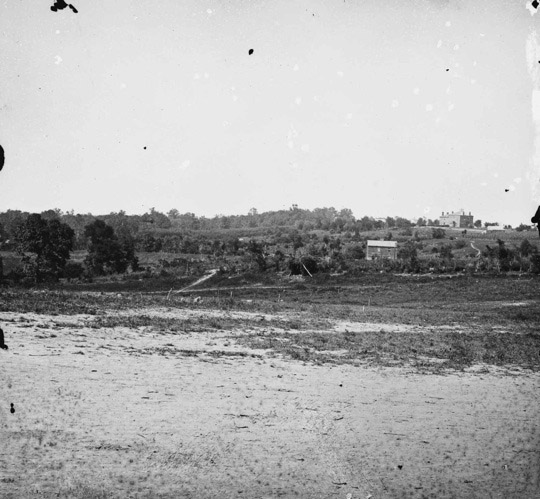
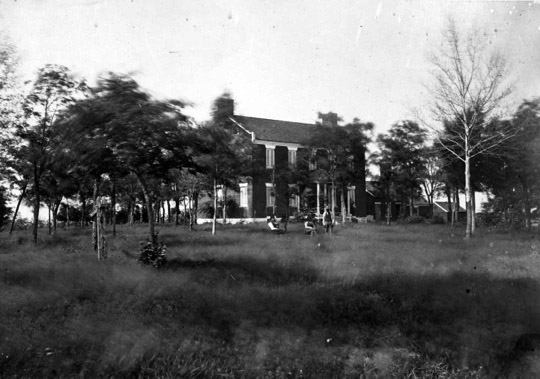
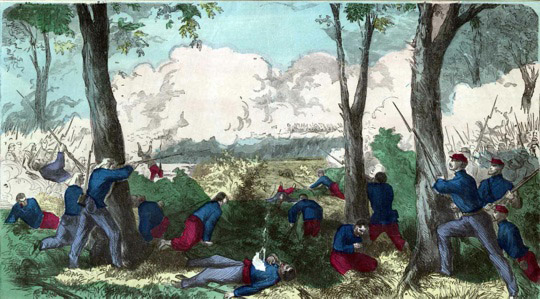
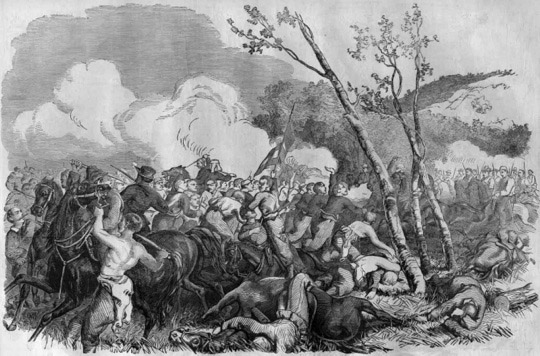
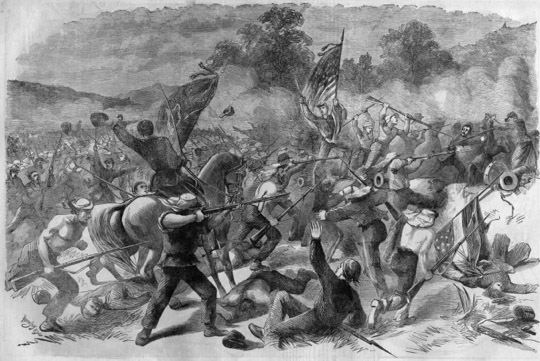
By then the outline of the plan had become clear to Confederate headquarters, and troops were switched to meet the attack on the left. The Confederates on the spot put up a valiant defense, but the overwhelming size of the Union force slowly pressed them back. Around noon they retreated across the turnpike to defensive positions on the hill of the Henry farm. There the line was reinforced until some 6,000 troops held the hill, including those led by Wade Hampton and General Thomas Jackson of Virginia.
Look — there is Jackson standing like a stone wall! Rally behind the Virginians!
General Bernard Bee, moments before he was mortally wounded
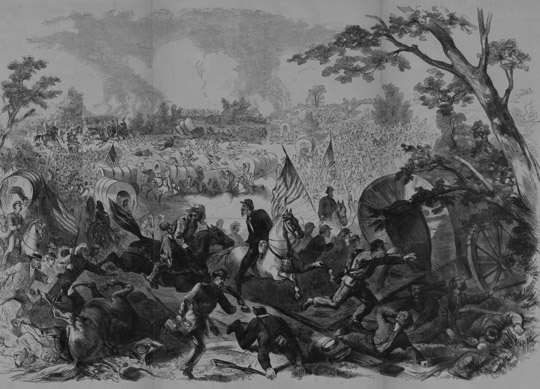
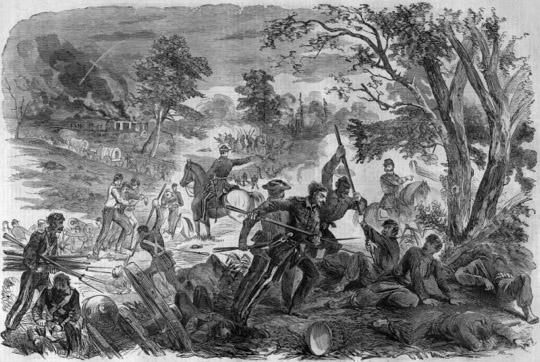
The line held. A few moments later, General Johnston gave the order for a counterattack, and the Confederate assault quickly broke the Union lines. Before long the Union retreat turned into a complete rout. It proved impossible to stop the soldiers from streaming all the way back to the Potomac. In the midst of the flight were hundreds of sightseers from Washington — including six senators and ten congressmen who had ridden out to watch the battle.
A Witness to the Rout
Congressman Albert Riddle, caught in the panic on the road back to Washington, left one of the most vivid accounts of the collapse:
A cruel, crazy, mad, hopeless panic possessed them… their lips cracked and blackened with the powder of the cartridges they had bitten off in the battle, their eyes starting in frenzy. No mortal ever saw such a mass of ghastly wretches.
Congressman Albert G. Riddle, on the Union retreat