Coxey's Army Marches on Washington
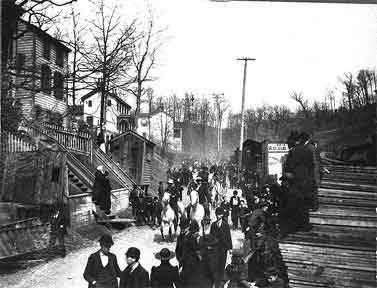
An "army of unemployed" was expected to invade Washington demanding relief from the depression. The demonstrators called for a government program of public works which would create jobs. In the end, less than 1,000 demonstrators arrived in Washington, most of whom were arrested for various misdemeanors.
Jacob Coxey was an Ohio businessman. To respond to the depression of 1893, he proposed two programs. First, he proposed that Congress issue $500 million in legal tender notes to pay for construction throughout the country. Second, he suggested that local governments be allowed to issue non-interest bearing bonds to pay for construction that would be backed by the national government. Coxey was thus suggesting that the federal government create jobs by paying for public works.
His march on Washington was a vehicle for publicizing his views. By the time demonstrators reached Washington, there were only 500 marchers left. When they arrived, Coxey was arrested on charges of walking on the grass. His efforts were duplicated out west where a group of men led by “General” Charles Kelley headed east, but never made it to Washington. While Coxey's plan was ignored in 1893, he lived to see his views applied when Franklin Roosevelt responded to the Great Depression with large public works activities.