 >
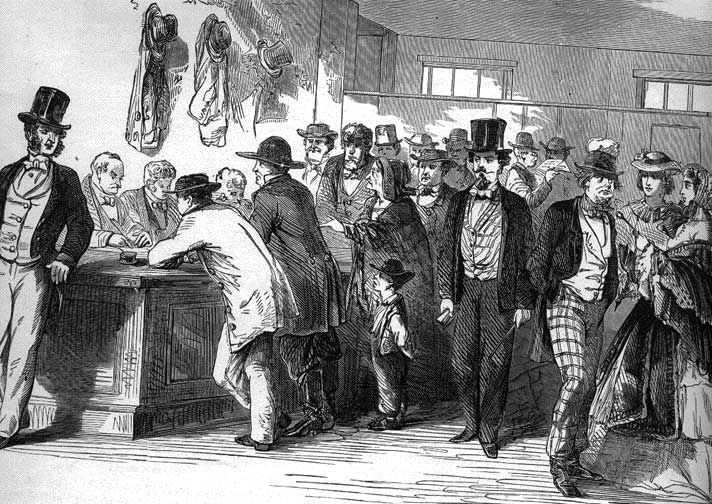
>Battle of Missouri
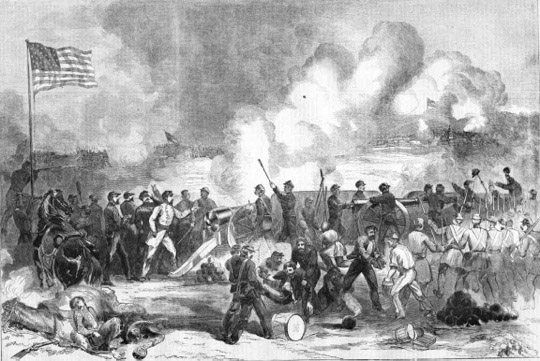
After his capture of Atlanta Union General Sherman began his march to the sea, through what was considered the heart of the confederacy. His march created a zone of destruction across a wide part of Georgia from Atlanta to Savannah.
With the start of the war the fight for Missouri began immediately. Leading the Union side was Francis P Blair Jr., brother of Lincoln's postmaster general. On the confederate side was the pro secessionist governor Clairborne Jackson, who had stated that Missouri should stand by its sister slave holding states. Blair received immediate assistance when he arranged to have a hard hitting Union stalwart Captain Nathaniel Lyon appointed commander of the Federal arsenal at St. Louis. Lyon took preemptive measures transferring much of the arsenals equipment to Illinois. A group of state militia under the command of militia commander Frost was preparing to seize the arsenal. Lyon however, struck first. On May 10 Lyon attacked the militia men with a group of newly formed pro union regiments drawn from St. Louis's fiercely unionist, German Americans. Lyon succeeded in subduing the militia. He captured 50 officers, 639 enlisted men and assorted equipment. When Lyon marched his prisoners back to the arsenal, rioting broke out in the streets of St. Louis, 28 died.
For a month attempts were made to reach a compromise. They failed. On June 14th Lyons troops entered Jefferson City and seized the seat of government. On June 16th Lyons forces attacked the states militia headquarters in Booneville. The militia was routed and the Unionist were in firm control of the state.
Lyon with 5,500 men soon occupied Springfield in the SW of the state. There he faced a larger force of 8,000 Missourians under Price and 5,000 other Confederates under General Ben McCulloch. General Fremont the renowned western explore was appointed commander of Union troops in Missouri. He had grand visions of heading down the Mississippi and capturing New Orleans. He could not however, spare any reinforcement for Lyon. Lyon, faced with a choice of attacking or withdrawing-chose to attack. In a fierce battle each side suffered nearly 1,300 casualties. Lyon was killed and his forces retreated in disarray. Confederate troops were able to advance all the way to Lexington, which they briefly seized. They were forced however, to soon withdraw.
Arkansas Troops at Wilson Creek
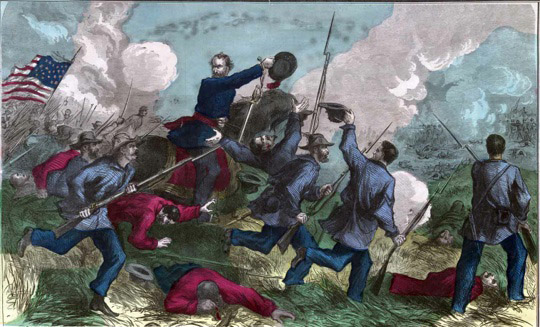
General Lyons leading into action the Iowa Regiment, whose colonel has been disabled.
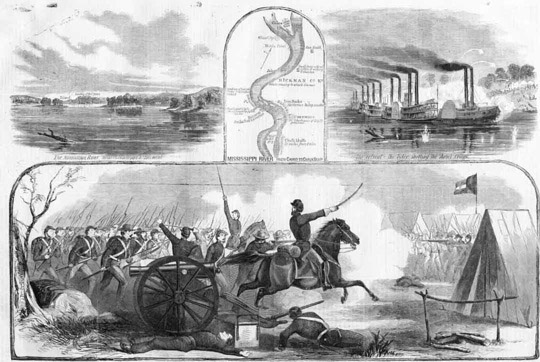
This illustration from Harpers Weekly December 16, 1861 of the Battle of Belmont that took place in November 7, 1861. The caption states: The battle of Belmont—charge of Colonel Dougherty, twenty-second illinois regiment, upon the rebel batteries.—sketched by mr. Bill Travis.
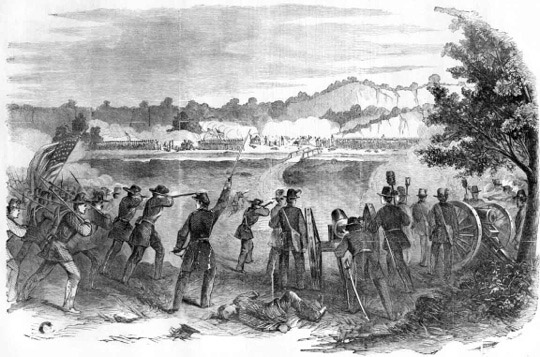
This illustration from Harpers Weekly shows the battle of Carthage Missouri
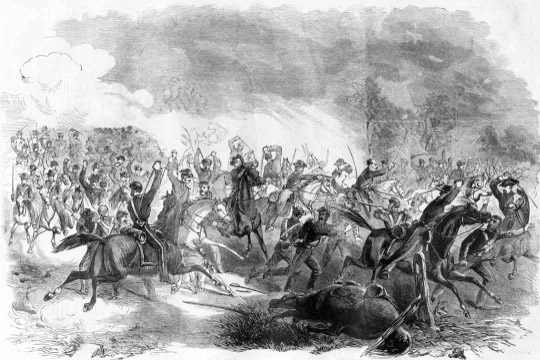
This illustration from Harpers Weekly August 24, 1861 shows the Battle of Dug Springs Missouri. The caption reads the Splendid Charge of United States Cavalry at the Battle of Dug Springs
This illustration from Harpers Weekly October 12, 1861 shows the Battle of Lexington Missouri.
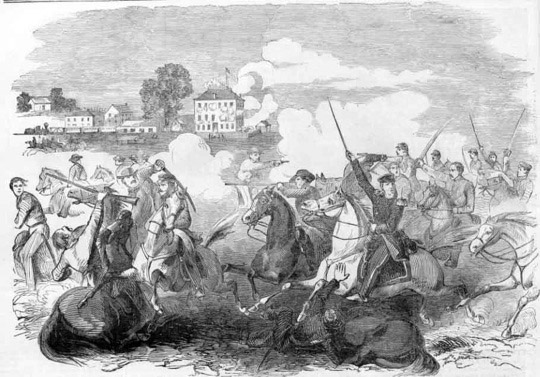
This illustration from Harpers Weekly August 17, 1861 shows the battle of Monroe Missouri. The caption reads the rescue Colonel Smith's Command at Monroe, Missouri by Governor Wood of Illinois.
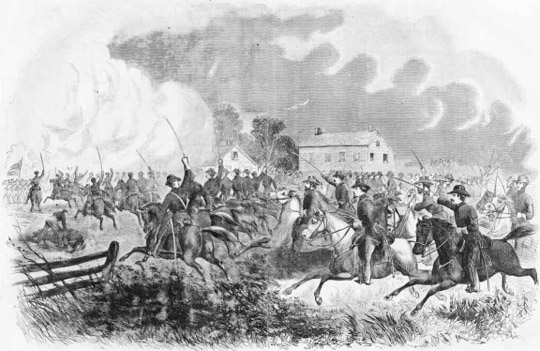
This illustration from Harpers Weekly November 16, 1861 shows the Battle of Springfield Missouri on October 24, 1861. The caption states Brilliant charge of General Fremont's body-guard through the town of springfield, missouri, on october 24, 1861