Ponce De Leon Claims Florida for Spain
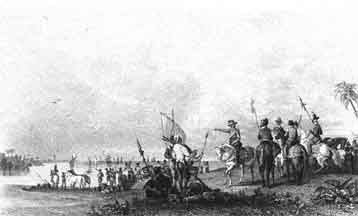
Juan Ponce de Leon was a Spanish conquistador who had sailed on Christopher Columbus's second voyage and later served as the first governor of Puerto Rico. In 1513 he led an expedition northward from the Caribbean in search of new lands and, according to legend, a fabled "fountain of youth" said to restore vigor to those who bathed in its waters. The story of the fountain was probably embellished by later chroniclers.
In the spring of 1513 his ships sighted a lush coastline that he named La Florida, likely because the landing fell near the Easter season known in Spanish as Pascua Florida, the "feast of flowers." He claimed the territory for the Spanish crown and explored portions of the coast before returning south, becoming one of the first Europeans to set foot on what is now the mainland United States.
Ponce de Leon returned to Florida in 1521 to establish a colony, but the attempt failed after his party clashed with the Calusa people, and he died of a wound received in the fighting. Despite the unsuccessful settlement, his claim opened Florida to generations of Spanish exploration and missionary activity, and Spain would retain control of the region, with brief interruptions, into the nineteenth century.