Cabot Claims North America for Great Britain
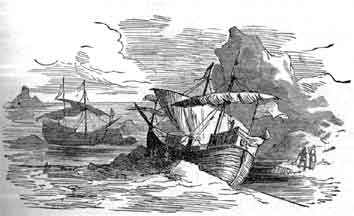
John Cabot, an Italian-born navigator sailing under a commission from King Henry VII of England, set out from Bristol in 1497 in search of a westward route to Asia. With a small ship and crew he crossed the North Atlantic, following the path of the earlier Norse voyages without knowing of them. His expedition was England's first significant venture into the age of transatlantic exploration.
On June 24, 1497, Cabot sighted land along the coast of what is generally believed to be Newfoundland or nearby Cape Breton. He went ashore to claim the territory in the name of the English crown, encountering signs of habitation but little of its people. He noted the abundant codfish in the surrounding waters, news that would soon draw European fishing fleets to the region.
Cabot's landfall gave England its earliest claim to North America, a claim that would underpin English colonization more than a century later. He set out on a second, larger voyage in 1498 from which he did not clearly return, and his fate remains uncertain. The rich fisheries of the Grand Banks that he reported became one of the first great European industries in the New World.