Sevastopol Taken
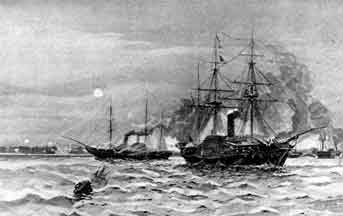
The siege of Sevastopol was the central campaign of the Crimean War (1853–1856), in which Britain, France, and the Ottoman Empire, later joined by Sardinia, fought to check Russian expansion. Sevastopol, on the Crimean peninsula, was the principal base of the Russian Black Sea Fleet, and its capture became the chief objective of the allied expedition after their landing in the Crimea in 1854.
The allies invested the city in an arduous siege lasting nearly a year, marked by major battles at the Alma, Balaclava, and Inkerman, and by terrible suffering from disease and the harsh winter. The struggle centered on the fortified heights guarding the port, particularly the Malakoff and the Redan. A final assault in September 1855 carried the Malakoff, rendering the Russian position untenable and forcing the defenders to evacuate and burn the southern part of the city.
The fall of Sevastopol in September 1855 effectively decided the Crimean War in favor of the allies. With their great naval fortress lost, the Russians had little prospect of victory, and negotiations soon followed. These culminated in the Treaty of Paris in 1856, which curbed Russian power in the Black Sea and confirmed the limits of Russian ambitions against the Ottoman Empire.