The Battle of Tippecanoe
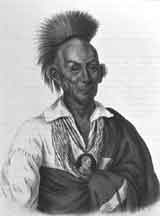
In the early 1800s the Shawnee leader Tecumseh worked to build a broad confederation of Native nations to halt the relentless American advance into the Ohio and Indiana country. His brother Tenskwatawa, known as the Prophet, supplied the movement with a powerful spiritual message of cultural renewal and rejection of American ways. From their settlement at Prophetstown, on Tippecanoe Creek, the brothers drew followers from many nations and alarmed the territorial governor of Indiana, William Henry Harrison, who was determined to break the alliance before it grew stronger.
In November 1811, while Tecumseh was away in the South recruiting allies, Harrison marched on Prophetstown with an army. The Prophet, against his brother's instructions, ordered a pre-dawn attack on the encamped soldiers. After fierce fighting Harrison's men held their ground and then burned the town, scattering its inhabitants. The battle shattered the Prophet's reputation and dealt Tecumseh's confederation a blow from which it never fully recovered. When the War of 1812 broke out months later, Tecumseh allied with the British, and his death in battle in 1813 ended the last great attempt at unified Native resistance east of the Mississippi.