1945-Contin ued
IS Ju), and returned to Tokyo targets (17 Ju) and
naval shipping at Yokosuka (18 Ju). The attack hit
Inland Sea shipping in the Kure area and airfields on
northern Kyushu (24 Ju), swept up the Sea to the
Osaka area and to Nagoya (25 Ju), and then repeated
the sweep (25, 28 and 30 Ju). After moving southward
(I Aug) to evade a typhoon, the force moved north-
ward to clear the Hiroshima area for the atomic bomb
drop and hit the Honshu-Hokkaido area (9-10 Aug),
and Tokyo (13 Aug). On 15 August at 0635, when
UNITED STATES NAVAL AVIATION
1910-1995
153
Admiral Halsey sent a message to his forces announc-
ing the end of hostilities and ordering the cessation of
offensive air operations, the first carrier strike of the
day had already hit Tokyo and the second was
approaching the coastline as it was recalled.
In this final carrier action of World War II, carrier
aircraft destroyed 1,223 enemy aircraft of which over
1,000 were on the ground, and sank 23 war and 48
merchant ships totaling 285,000 tons.
13 July
Captain Ralph S. Barnaby, commanding the
Johnsville Naval Aircraft Modification Unit, reported
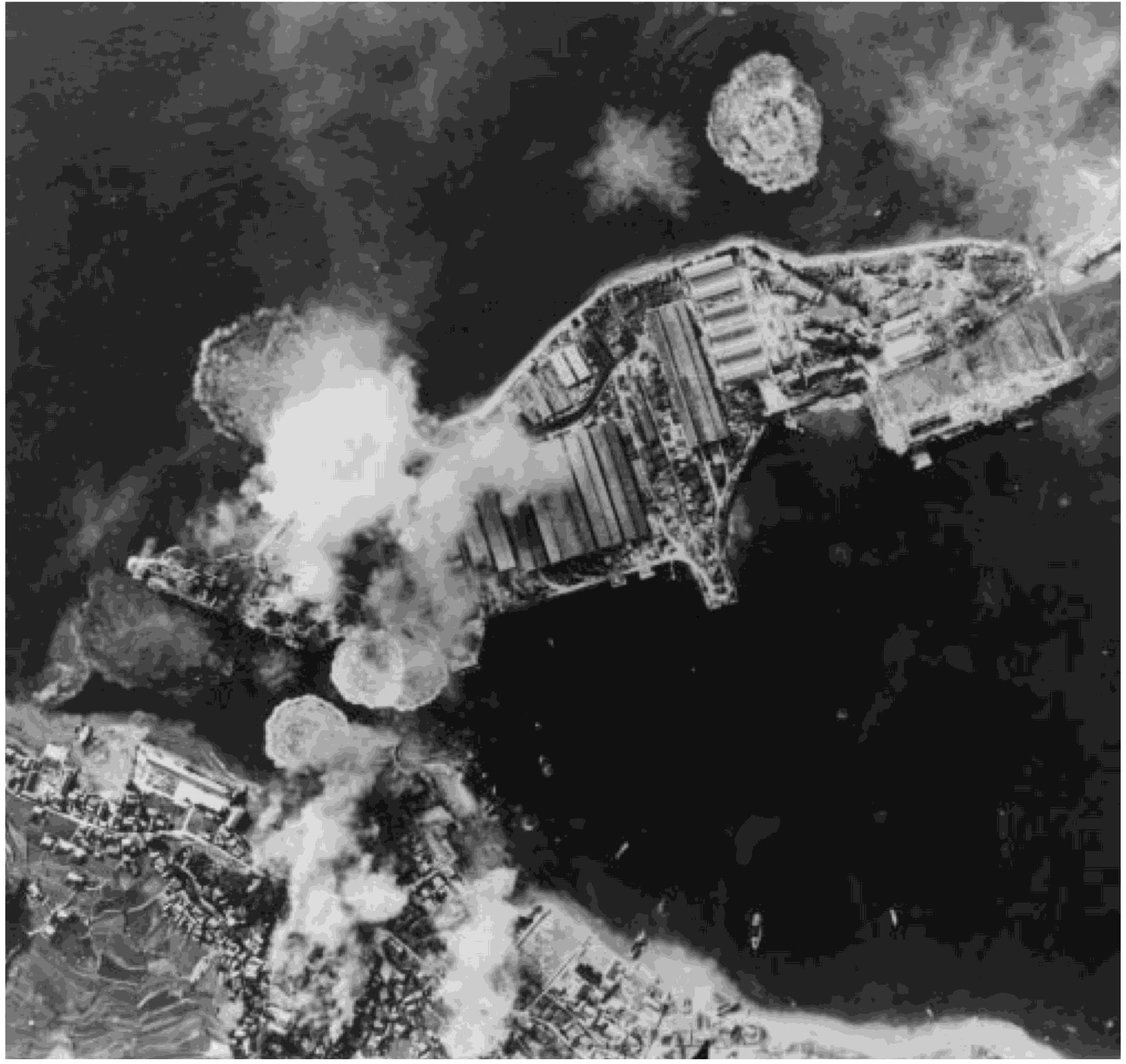
Planes of the Third Fleet attack camouflaged camas in assault on Japanese naval base at Kure, July
1945 490162
 |
3 |
 |